Behind every fresh ingredient is a grower, a process and a lot of care. At Oliver Kay, our relationships with trusted growers help us bring quality fresh produce to businesses across the UK. With over 30 years of experience, we offer a wide range of products, including fresh fruit and vegetables, dairy, meat, fish and speciality ingredients. Our trusted relationships with growers and suppliers help us deliver quality, consistency and reliable service to Bidfood customers.
Our partnership with Blackdown Growers is a great example of this. Having worked together since 2013, they provide us with a variety of fresh herbs and salads.
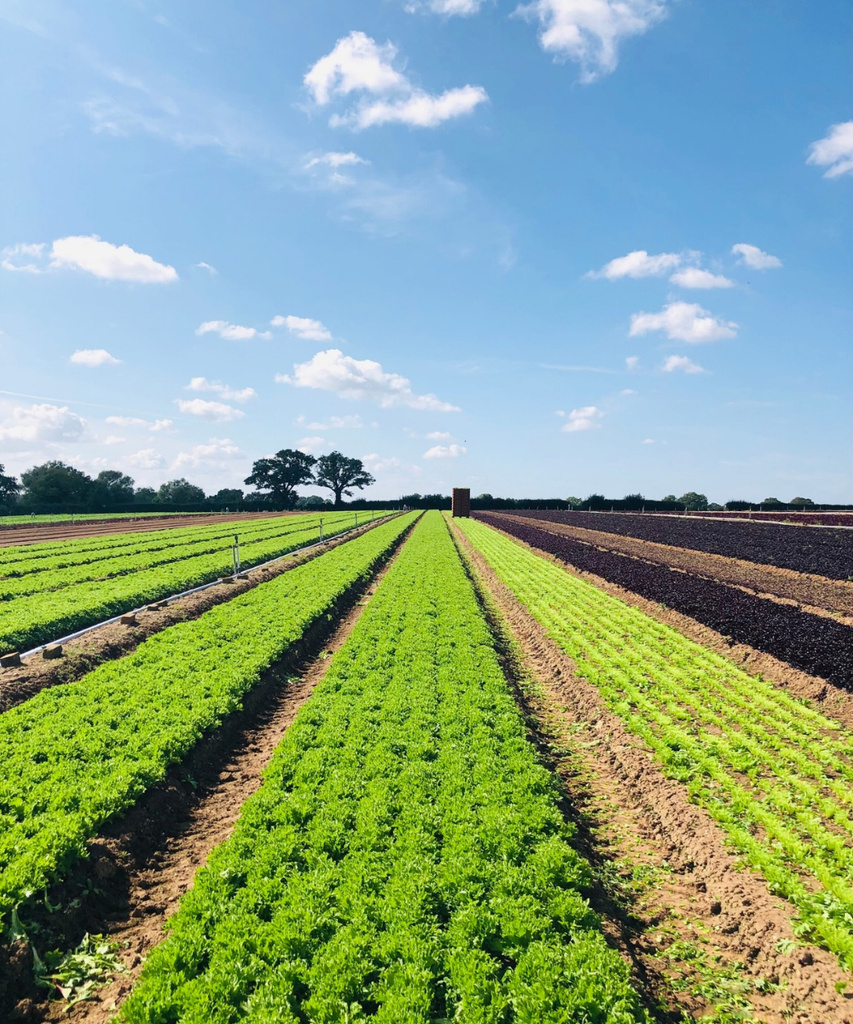
As Head of Sustainability, I recently joined the Oliver Kay team on a visit to Blackdown Growers to discover where the produce comes from and meet its growers. I wasn’t quite sure what to expect. However, this visit gave me the opportunity to learn more about how our fresh produce is grown and the challenges growers face along the way. Aside from the mud, glasshouses and lots of lettuce (and yes, we had all three!) it was completely a new area of the industry for me.
In this blog, we go behind the produce to meet the people who grow it. We explore their expertise, the challenges they face and the care that goes into every crop. We also look at how long-standing partnerships help bring quality fresh produce to our customers
Who are Blackdown Growers?
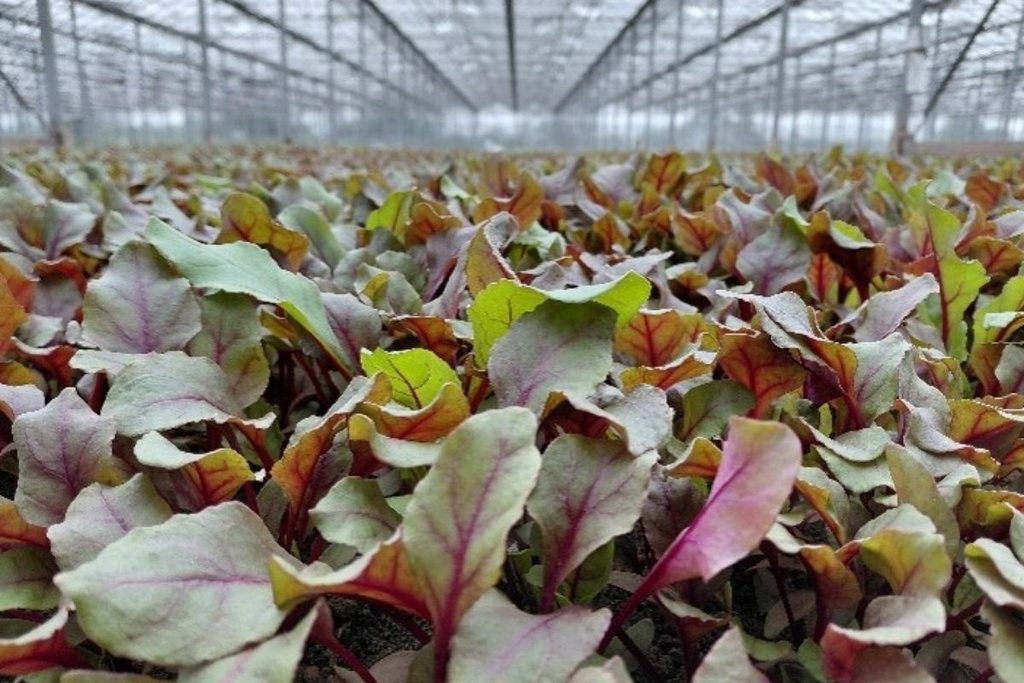
Founded in 1969, Blackdown Growers is a family-run business that has steadily expanded over the years. It now has 43 acres of glasshouses, complemented by 140 acres of outdoor growing areas in the UK, as well as a site in France, which has 100 acres of outdoor growing space and 12 acres under glass.
Their French site enables them to source fresh produce from a warmer climate without relying on air freight, as products are shipped by road from France. It was a pleasant surprise to learn that the UK glasshouses support year-round growing without heating, relying entirely on the sun. Outdoor areas are productive from April to September, so the benefits of glasshouses are self-evident.
How is unpredictable weather affecting growers?
It’s not just us humans that are caught out by the changing weather. Conversations about the weather were inevitable. Extreme heat and prolonged dry periods, rapidly followed by heavy rain and hailstorms, are challenges that growers are increasingly facing across the UK and beyond.
This year alone has seen record-breaking heat, drought conditions and growing pressure on water resources, making crop production more challenging and increasing the cost of maintaining sensitive crops such as leafy salads.
The glasshouses inevitably provide a lot of protection from torrential rain and hail. We learned during the visit that a nearby producer (unrelated to Blackdown) had an entire outdoor crop of spinach wiped out in a single overnight hailstorm. As many have said before, it’s farmers who carry the risk of unpredictable weather and the commercial losses that come with it.
How does Blackdown Growers manage its environmental impact?
Blackdown Growers hold several certifications including Global GAP, LEAF marque (since 2011), Red Tractor and BRC. Global GAP requires farms to actively manage and minimise environmental risks, including those relating to water stewardship, soil quality and pollution control. The LEAF Marque is indicative of the farm progressively improving their farming sustainability standards, with initiatives that protect biodiversity, manage water better and help soil fertility.
Although, glasshouses would seem ideal for harvesting rainfall (there was a downpour hammering down on the glasshouse during our visit!) Blackdown Growers can’t harvest the rainfall to irrigate crops as water for irrigation needs to be absolutely clean (rather than from storage tanks). So, they use clean, fresh water from an on-farm borehole, thanks to their abstraction licence.
Could flowering herbs offer more than you think?
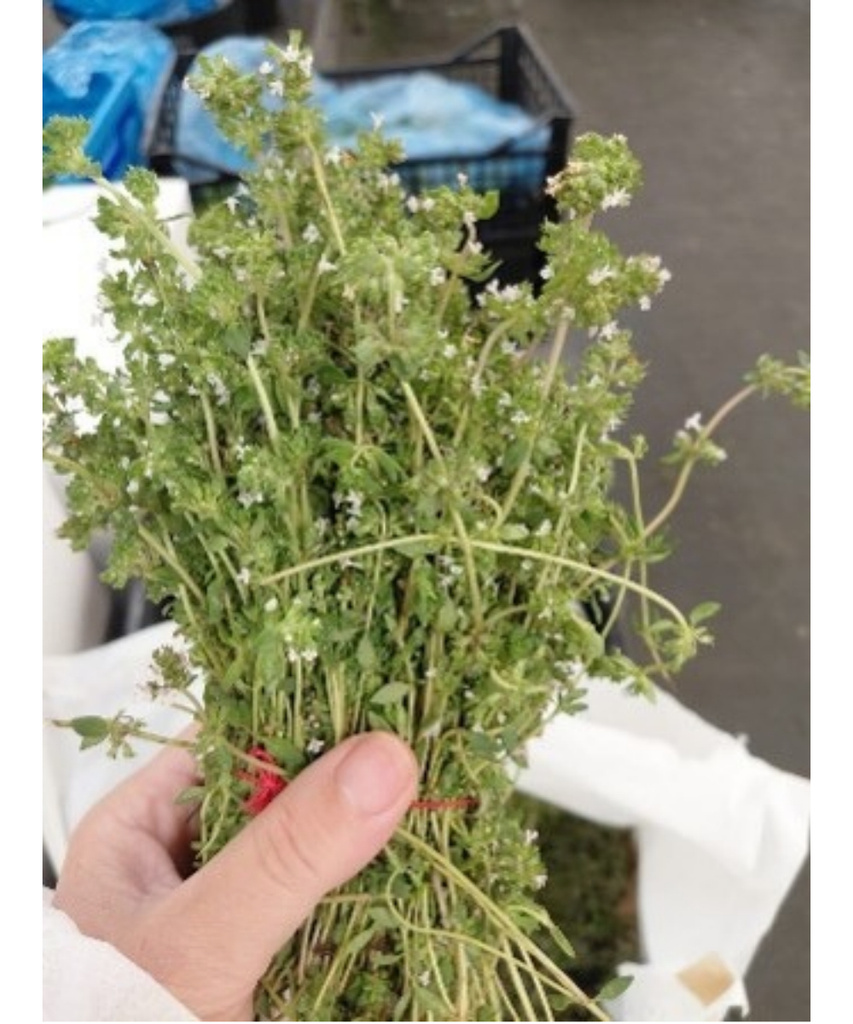
One of the most enlightening parts of the visit was learning about customer rejections due to perceived quality issues. For example, thyme flowers prolifically early summer, and we learned that the flowers are a perfectly usable part of the herb; they have a milder, slightly sweet and lemony flavour compared to the leaves, and can be used to add aromatic variety to many dishes, as well as a garnish. Unfamiliarity can sometimes prompt rejection, rather than quality. When produce is unfit for sale or rejected, growers plough it back into the fields to add organic matter and improve the soil.
Overall, it was one of the loveliest-smelling and aromatic warehouse I’ve ever visited, full of scents of basil, rosemary and thyme. We enjoyed meeting the employees at Blackdown Growers, a very motivated and committed team, some of whom have worked there since leaving school.
I was joined by Jo Rudkin, National Account Manager at Oliver Kay, who shared her thoughts on the visit.
“Our visit to Blackdown Growers was truly inspiring. The passion, care and expertise that goes into growing their exceptional herbs, both under glass and in the field, is clear to see. Their commitment to sustainability, from innovative water management through reservoirs and boreholes to their focus on product integrity, demonstrates a business that is not only producing outstanding quality but also investing responsibly in the future.”
Jo RudkinNational Account Manager, Oliver Kay
To find out more about buying produce from Blackdown Growers, please speak to either your Bidfood or Oliver Kay account manager, or sign up to become a customer here.