Products using regenerative principles

Wildfarmed
Wildfarmed is the leading regenerative food and farming business on a mission to get better food, from better farms, onto plates across the country.
The Wildfarmed network brings together a community of farmers, food businesses and customers all doing their bit to transform our food system and help move towards a more resilient future.
Unlike conventional systems, Wildfarmed growers produce wheat, oats and barley in healthy, living soil using regenerative practices that work with nature, not against it. By farming in this way, Wildfarmed fields are actively increasing biodiversity, improving soil health, minimising water pollution and reducing carbon. Through measuring what is happening in its fields Wildfarmed has established itself as one of the leaders in outcome verification of regenerative practices. Wildfarmed has moved beyond a practice-based checklist to a rigorous system of third-party audited outcomes.
Wildfarmed has a fully segregated supply chain, meaning that every crop is grown by farmers from their community and is traceable from field to focaccia. The result? An exceptional range of great quality, delicious flour – grown with nature, milled with care and supporting British farmers.
For the small print on Wildfarmed standards, these are audited by Control Union and available on request.

Doves Farm Foods (Freee)
Produced to the highest organic standard, Doves Farm Foods put nature first when crafting their range of organic flours and foods. Organic farming is planet-friendly farming: it’s a sustainable, whole-farm approach which is truly regenerative, incorporating multiple restorative practices which improve soil health and work in harmony with nature. Organic is also the only legally defined sustainable farming standard.
On their organic farm, Doves Farm Foods work to build natural soil fertility, using crop rotations to help break cycles of pests and disease instead of using numerous artificial pesticides, fertilisers and herbicides, which can pollute our soil and water systems. This also means their farm is a haven for wildlife and provides homes for bees, birds and butterflies.
Their supply chain is fully traceable and sourced from Sedex-registered suppliers whenever possible. The palm oil they use is RSPO certified identity preserved oil from Columbia. On top of this, their organic palm oil producers are dedicated to enhancing their local environment, by setting aside at least 10% of their land for wildlife corridors. They have solar panels and provide employees with electric vehicle charging points on their site.
Yeo Valley
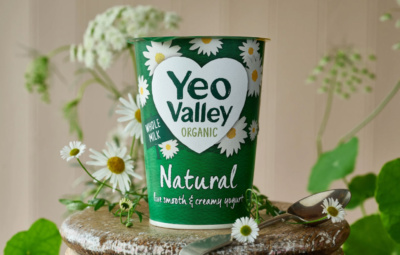
Yeo Valley Organic is first and foremost a trailblazer in sustainable and regenerative food production. As a long-established organic dairy producer in the West Country, Yeo Valley Organic has gone beyond organic standards to lead the way in regeneration. Their ambitious regenerative organic farming programme focuses on restoring and enhancing natural systems by measuring soil carbon stocks across supplier farms and implementing practices that improve soil health, biodiversity, and ecosystem resilience. These include regenerative grazing—rotational systems that allow grass to rest and regrow—alongside diverse cropping strategies such as herbal leys, cover crops, and pasture mixes, as well as agroforestry and composting.
Innovation extends beyond farming. Yeo Valley Organic has installed over 10,000 solar panels across production sites, including an acre of panels on the cow shed at their founding farm, significantly reducing reliance on fossil fuels. On packaging, they were the first UK dairy brand to introduce 100% recycled plastic yogurt pots and continue to push boundaries to ensure packaging is fully recyclable and reusable, reinforcing their commitment to circularity. Yeo Valley Organic is not just keeping pace with sustainability—it is setting the standard for the future of organic and regenerative food systems.
Hillfarm
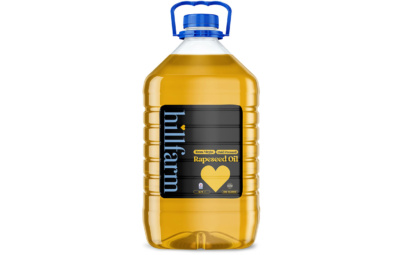
Hillfarm were the first to produce cold pressed rapeseed oil 22 years ago. They use regenerative farming practices that improve soil health, enhance biodiversity, and reduce carbon emissions. Notably, they banned the use of neonicotinoids as far back as 2014 to protect pollinators, an action that was later recognised by Friends of the Earth.
Their farm and production facilities are powered by solar energy – which helped them earn a Gold Award from the Suffolk Carbon Charter, reflecting their measurable reductions in carbon emissions. They’ve established wildflower margins, diverse habitats, and introduced beehives across our farmland. These efforts directly support the health of local bee populations and contribute to the production of Hillfarm honey. All their rapeseed is grown, harvested, and cold-pressed on their family farm in Suffolk. They control every step of the process, ensuring full traceability, zero imports, and minimal food miles, all producing a very flexible and healthy oil to use everyday.
Nestlé
Nestlé is one of the world’s largest food and beverage companies, with a broad global footprint encompassing brands from coffee to confectionery, dairy to pet care. Nestlé has ambitious sustainability commitments, especially around carbon emissions, regenerative agriculture and packaging. The company has set a goal to reduce greenhouse gas emissions by 50% by 2030 (vs 2018 baseline) and to reach net zero by 2050. By the end of 2024 Nestlé had reached a 20.38% reduction.
Regenerative agriculture is a major focus for Nestlé due to the wide range of ingredients used in their products. Globally, Nestlé is working with over 500,000 farmers to adopt regenerative farming practices and focus on enhancing soil health, capturing carbon, and promoting biodiversity. The company has set a goal for 50% of their key ingredients to be sourced from farmers adopting regenerative agricultural practices by 2030.
McCain
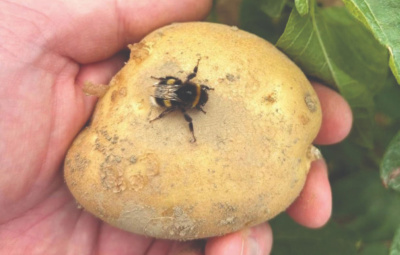
McCain Foods is a global leader in frozen potato products—operating in over 160 countries, partnering with around 3,900 farmers worldwide, and producing millions of tonnes of potato products annually. Given this scale, McCain recognises that its business has both a significant environmental footprint and a strong opportunity to influence sustainable practices across its supply chain and operations.
Farming is at the centre of McCain’s sustainability strategy. They have a commitment to implement regenerative agriculture practices across 100% of their potato acreage by 2030. Their framework emphasises healthy soils, reduced chemical inputs, water optimisation, and biodiversity improvements — all designed to make potato farming more climate-resilient and sustainable.
Beyond farming, McCain has taken steps to reduce its emissions, improve energy and water use efficiency, and offer healthier food options. They aim to reduce sodium and artificial ingredients in their products and have expanded their plant-forward offerings to meet evolving consumer demand.